Winter Camping vs. Shoulder-Season and Fall Camping: What's the Difference?
Winter camping in Canada generally means camping in temperatures below 0°C, often well below, with snow on the ground and specialized gear to manage the cold. Fall camping and shoulder-season camping sit in the milder zone between the busy summer months and full winter conditions, usually ranging from about 15°C down to just above freezing, with lighter gear demands and fewer crowds than peak season but more comfort than a January night in your tent. Knowing which category your trip falls into changes almost everything: what you pack, how you set up, and how much company you'll have at the campground.
Here's a rough breakdown to help you plan:
| Season | Typical Overnight Temps | Gear Needs | Crowd Levels |
|---|---|---|---|
| Fall camping (Sept–Oct) | 5°C to 15°C | 3-season tent, warm sleeping bag, layers | Moderate, busy on weekends |
| Shoulder-season (late Oct–early Dec, March) | -5°C to 5°C | Cold-rated bag, insulated pad, extra tarps | Low, many sites/facilities reduced |
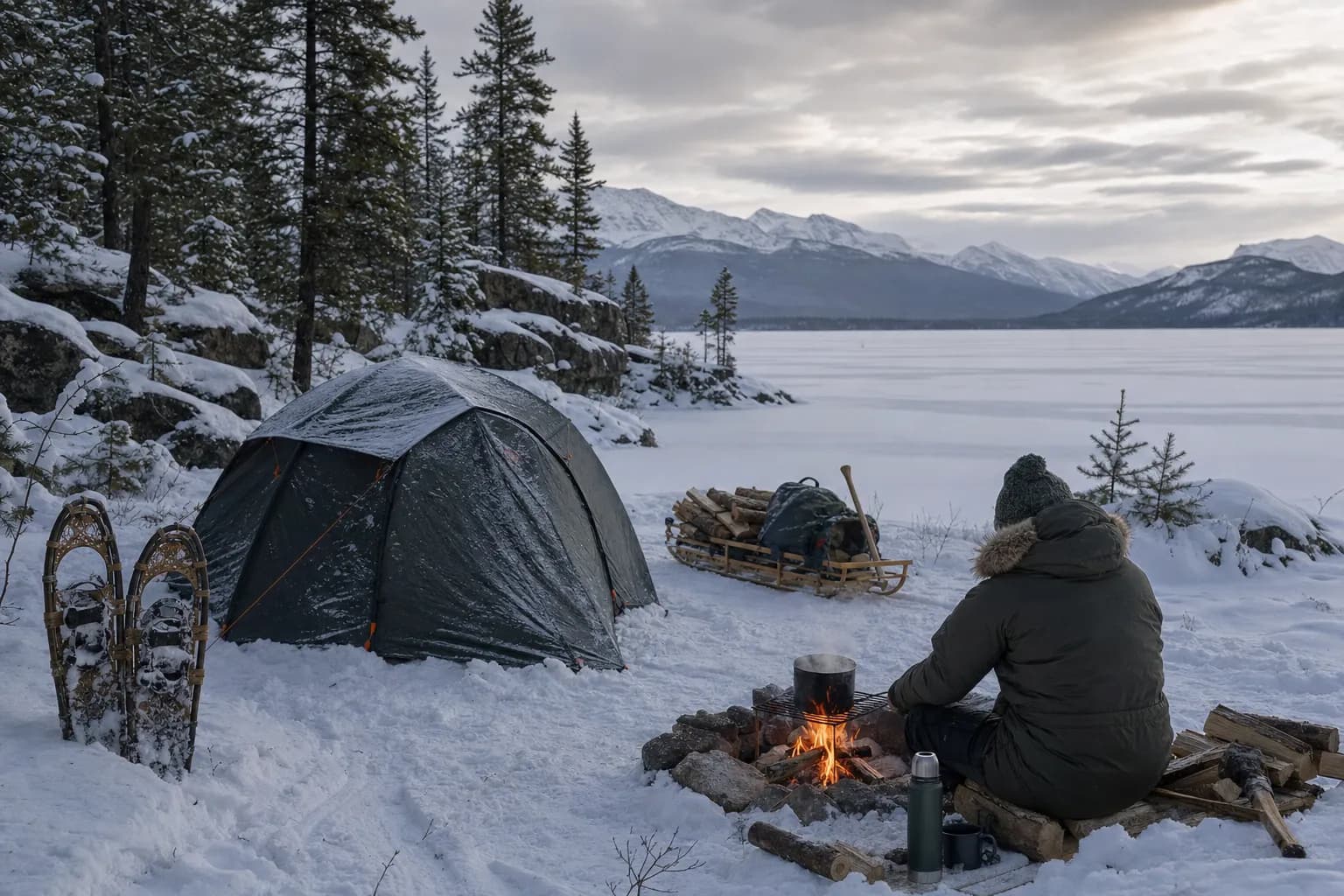
| Deep winter (Dec–Feb) | -25°C to -5°C or colder | Winterized tent, four-season bag, stove system, insulated boots | Very low, some parks closed entirely |
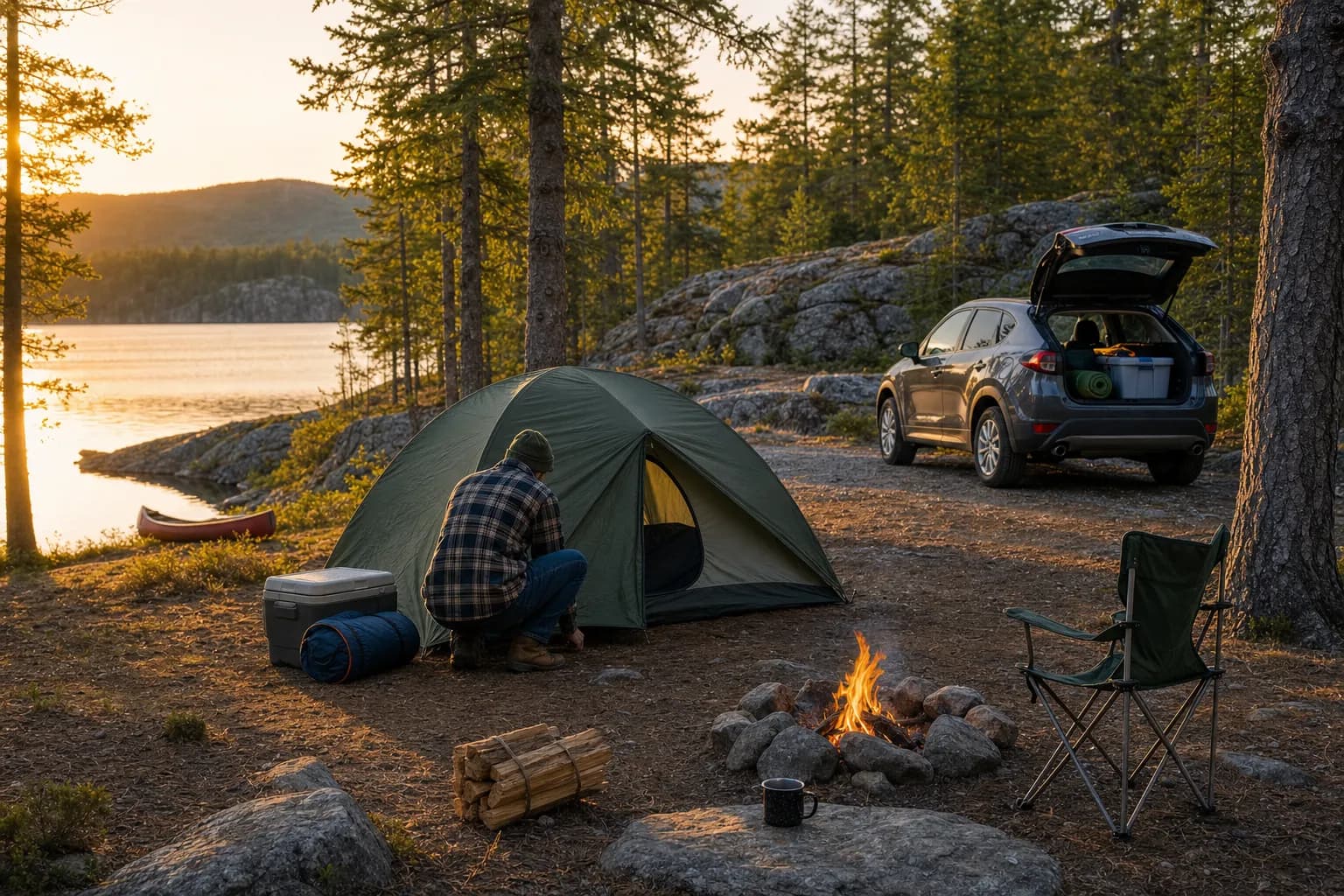
Fall camping is the easiest entry point if you're new to cooler-weather trips. Days are still pleasant, campfires feel cozy rather than essential, and most campgrounds still have water systems running. It's a great season to test gear and routines before committing to anything colder. We've got a separate guide, Fall Camping in Canada: Best Parks and Tips for Cooler Nights, if you want specifics.
Shoulder-season is where things start to get more serious. Water taps may be shut off to prevent freezing, some loops close for the year, and you'll need to check each park's official page for exact closing dates rather than assuming anything stays open. This is also when fire bans can flip unexpectedly with early cold snaps, so checking your provincial wildfire service before you go is worth the two minutes it takes.
Deep winter camping is its own discipline entirely — different tents, different sleep systems, different daily rhythms around melting snow for water and managing daylight hours. If that's the style you're after, our companion pieces on Winter Car Camping in Canada: What to Pack and Where to Go and How to Set Up a Winter's Camp: A Beginner's Checklist go into the details.
Essential Gear: Sleeping Systems, Layering, and Shelter Setup for the Cold
Winter camping success comes down to three things: what's under you, what's on you, and what's around you. Get the sleeping system and layering right, and a night at -15°C feels manageable. Skip a step, and you'll be packing up at 3 a.m.
Sleeping bags and pads Look for a bag rated at least 10°C colder than the lowest temperature you expect — manufacturer ratings are optimistic, and a cold sleeper needs more margin. Down bags pack smaller and insulate better for the weight, but they lose loft if they get damp, which happens easily near snow. Synthetic fill is heavier but forgives condensation, a real consideration on multi-night trips.
Your pad matters as much as the bag. Look at the R-value, which measures resistance to ground conduction:
| Season | Minimum R-value |
|---|---|
| Shoulder-season (fall) | 2–3 |
| Winter camping, mild | 4–5 |
| Deep winter, -20°C and below | 5.5+ |
Many campers stack a foam pad under an inflatable one — cheap insurance if your air pad fails overnight.
Layering system Build from a moisture-wicking base layer, add a fleece or wool mid-layer for warmth, and finish with a windproof, breathable shell. Avoid cotton entirely; it holds moisture and pulls heat from your body. Bring a dedicated dry set of base layers just for sleeping — damp clothes from the day's activity will chill you fast once you stop moving. Don't forget a warm hat, since a surprising amount of heat escapes through your head, and a pair of down booties makes a real difference around camp.
Shelter and site setup Choose a site sheltered from wind but not directly under snow-laden branches. Stomp down your tent footprint before pitching to prevent overnight melt-and-refreeze pockets under your pad. Standard tent stakes won't hold in snow — swap in snow stakes or bury sticks horizontally ("deadman anchors") for a secure pitch. If you're staying somewhere with heated options, Ontario Parks yurts and oTENTiks are worth checking for winter availability. Whatever your setup, check Environment and Climate Change Canada's forecast before you go, and confirm current conditions with the park directly.
Staying Warm and Fed: Overnight Comfort, Cooking, and Water Management
Winter camping success or misery usually comes down to what happens between dinner and breakfast — how your tent breathes, how you manage moisture, and whether your stove actually lights when it's -15°C. Get these details right and you sleep warm and eat well. Get them wrong and you spend the night shivering next to a frozen fuel canister.
Condensation is the enemy, not the cold. Every breath you exhale is moisture, and in a sealed tent that moisture has nowhere to go except onto your tent walls and sleeping bag. Crack a vent or a window flap even in a snowstorm — a few centimetres is enough. Frost forming inside your tent fly by morning is normal; a soggy, dripping ceiling means you sealed things up too tight. If you're double-walled, keep the inner tent's mesh panels partially open rather than fully closed.
Manage heat loss from the ground up. Most overnight heat loss happens through contact with snow or frozen ground, not through the air. A closed-cell foam pad under your inflatable pad adds real insurance, and packing snow into a hard, flat platform under your tent (rather than camping on loose powder) prevents cold pockets from forming under your hips and shoulders overnight.
Stove fuel choice matters more than people expect. Canister stoves (isobutane/propane mixes) lose pressure and sputter below about -7°C unless you keep the canister warm — sleeping with it in your bag, or at least in your jacket pocket while cooking, keeps it functional. Liquid-fuel stoves (white gas) perform far more reliably in true winter camping conditions and are the standard choice for anyone heading out below -10°C regularly. If you're doing fall camping shoulder-season trips, canister stoves are usually fine.
Water management checklist:
- Sleep with your water filter or bladder inside your sleeping bag — filters crack if the water inside freezes.
- Store water bottles upside down; ice forms at the top first, so this keeps the mouth from freezing shut.
- Melting snow for water takes more fuel than people budget for — bring extra canisters or fuel bottles.
- Insulate bottles in a sock or wrap them in your parka during the day.
Before heading out, check Environment and Climate Change Canada for overnight low forecasts, and note that fees, fire restrictions, and seasonal closures vary by park — always confirm current conditions with the campground operator before you go.
RV Winter Camping and Choosing the Right Canadian Park
Winter camping in an RV solves a lot of the cold-weather problems tent campers wrestle with, but it introduces a new set: frozen water lines, dead batteries, and propane systems that don't love -20°C nights. If you're planning to winter camp in a trailer or motorhome anywhere in BC, Alberta, or Ontario this season, your rig needs almost as much prep as your body does.
Protecting Your RV From the Cold
Start with your water system. Unless your rig has heated, enclosed tanks and heat-taped lines (common in "four-season" units), plan to winterize your fresh water system and haul water in jugs instead. A cracked pipe is a much worse problem than an inconvenient walk to a tap.
Skirting matters more than most new RVers expect. Wrapping the underbelly with foam board, vinyl skirting, or even a simple tarp system traps ground heat and cuts propane consumption noticeably. Combine that with a small ceramic heater or catalytic propane heater aimed at your tanks, and you'll buy yourself a lot of margin on cold nights.
Speaking of propane: cold temperatures reduce propane pressure and output, so keep tanks as full as possible and consider a two-tank swap system so you're never caught empty at -25°C. Battery care is the other quiet failure point — lithium batteries in particular lose capacity fast in the cold and shouldn't be charged below freezing without a built-in heating element. A simple battery blanket or bringing batteries inside overnight extends their life considerably.
Quick RV winter checklist:
- Heat tape or skirting on water lines and tanks
- Backup water jugs in case lines do freeze
- Extra propane tank and pressure regulator rated for cold
- Battery insulation or heating pad
- Roof rake or broom for snow load
- Block heater cord if towing a diesel truck
Where to Camp
Not every campground stays open through winter, and fewer still offer serviced RV sites. In BC, some BC Parks locations keep a portion of sites open for winter camping with vault toilets and no water service — check individual park pages before you go. Alberta's Alberta Parks system similarly maintains select winter-use campgrounds, often first-come, first-served once the main reservation season ends. In Ontario, several Ontario Parks properties near Ontario towns like Huntsville or Bancroft offer winter camping with electrical sites still active, though water is typically shut off.
For backcountry and more remote winter stays, Parks Canada sites in the Rockies and Ontario's national parks often permit winter backcountry camping with a permit, separate from the regular summer reservation window.
Before booking anything, check Environment and Climate Change Canada forecasts and provincial fire ban notices, since conditions and closures shift quickly in shoulder season. For full park-by-park details and booking links, head to https://everythingcamping.ca.
Safety, Packing, and Family-Friendly Fall and Winter Camping Tips
Winter camping in Canada rewards you with quiet trails and campgrounds that feel like your own private wilderness, but the margin for error is smaller than it is in July. Cold weather punishes small mistakes — a wet glove, a skipped weather check, a fire built too close to a tent — so a bit of planning goes a long way. This section rounds up the safety basics, the packing list, and the family and pet considerations that make fall and winter camping in Canada safer and more enjoyable.
Know the signs of hypothermia and frostbite. Hypothermia often starts subtly: shivering, slurred speech, clumsiness, and confusion. If someone in your group stops making sense or can't zip their own jacket, that's your cue to get them warm and dry immediately — extra layers, a warm (not hot) drink, and shelter from wind. Frostbite shows up as numbness and waxy, pale skin, usually on fingers, toes, ears, and noses first. Check each other regularly; it's hard to notice frostbite on your own face. Kids and pets lose heat faster than adults, so watch them closely and bring them inside sleeping bags or the vehicle at the first sign of trouble.
Check avalanche and park conditions before you go. If you're camping near mountain terrain in BC or Alberta, check regional avalanche bulletins and park alerts before setting out, and again the morning of your trip — conditions change fast. Always check the official park page for closures, road conditions, and fire ban notices before you travel, since these can shift with little warning during shoulder seasons.
Fall-to-winter transition checklist
- Traction devices for boots and tires
- Headlamp with spare batteries (cold drains them fast)
- Extra dry socks, mitts, and a spare base layer
- Emergency blanket and basic first aid kit
- Offline maps — cell service is unreliable in many backcountry and crown-land areas
Campfires in snow need a cleared, non-flammable base — snow melts unevenly and can collapse under a fire. Keep water or a shovel nearby, and always confirm there's no active fire ban through your province's wildfire service before lighting up.
Family and pet tips: shorter first nights, extra blankets, and a warm vehicle nearby make cold-weather trips much easier with kids or dogs. Not all winter sites allow pets, so verify with the campground first.
Ready to plan your next trip? Head to Everything Camping Canada for site-specific guides to help you pick the right park and show up prepared.
People Also Ask
Is winter camping in Canada safe for beginners?
It can be, but it's not something to wing on your first cold-weather trip. Start with a shoulder-season outing or a winter car-camping site close to home before you attempt anything backcountry, and go with someone who's done it before if you can. Check Environment and Climate Change Canada's forecast before you leave and have a bail-out plan (a heated washroom, your vehicle, or a shorter route back) if temperatures drop faster than expected.
What temperature is too cold for tent camping?
There's no single cutoff — it depends more on your gear and experience than the thermometer. Most beginner winter campers stay comfortable down to around -10°C to -15°C with a properly rated sleeping bag and good layering; below that, the margin for error shrinks fast and frostbite risk climbs. If overnight lows are forecast well below -20°C, consider an RV, yurt, or oTENTik instead of a tent until you've got more cold-weather nights under your belt.
Do you need a special tent for winter camping?
Not always, but a four-season tent helps. These tents are built with sturdier poles and less mesh to handle snow load and wind, which matters if you're camping through a Canadian winter storm rather than a calm, dry night. A three-season tent can work in mild fall or early winter conditions, but pair it with a good footprint, extra guy-lines, and a sleeping system rated well below the expected low.
Which Canadian parks stay open for camping in winter?
Quite a few — but availability varies year to year and by campground, so always check the official page before you book. Many national parks and provincial parks operate designated winter camping loops or backcountry sites; consult the Parks Canada and provincial parks websites (such as BC Parks or Alberta Parks) for current seasonal openings, road access, and fire ban notices before you plan your trip.